What Is SAP Functional? Complete Beginner’s Guide
Introduction
SAP ERP has become the backbone of modern enterprises, helping organizations manage finance, supply chain, HR, and customer relationships in a unified system. For beginners, understanding SAP Functional is the first step toward building a career in ERP consulting. Unlike technical roles, functional consultants focus on business processes, making this path ideal for those with management, commerce, or industry knowledge. This guide will walk you through SAP Functional modules, skills, career scope, and learning paths in India.
What Is SAP Functional?
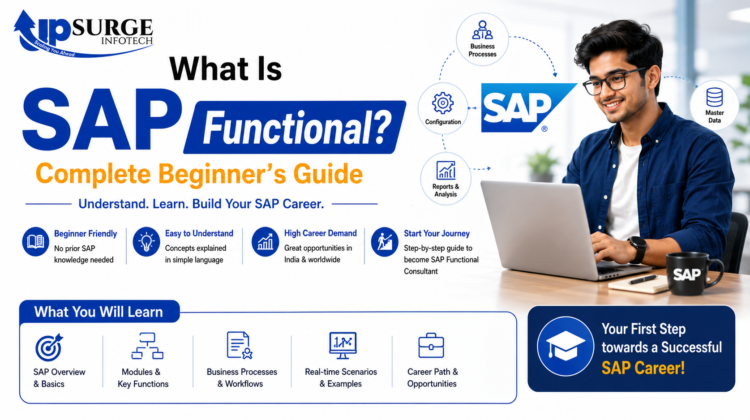
SAP Functional refers to the business-oriented side of SAP ERP. Functional consultants analyze business requirements, map them to SAP modules, and configure solutions that align with organizational goals. They don’t write code but instead ensure that SAP reflects real-world processes like accounting, sales, or HR. In simple terms, they act as translators between business teams and technical developers, ensuring smooth ERP implementation.
Major SAP Functional Modules
1. SAP FICO (Financial Accounting & Controlling)
SAP FI helps organizations manage financial transactions, reporting, and compliance. It automates tasks like balance sheets, profit & loss statements, and tax calculations. For beginners, this module is crucial because finance is the backbone of every business, and SAP FI ensures accuracy and transparency in financial data.
2. SAP MM (Materials Management)
SAP MM deals with procurement, inventory, and vendor management. It ensures that raw materials and products are available at the right time and cost. This module is vital for industries like manufacturing and retail, where supply chain efficiency directly impacts profitability.
3. SAP SD (Sales & Distribution)
SAP SD manages customer orders, billing, and logistics. It integrates sales processes with inventory and finance, ensuring smooth order-to-cash cycles. Consultants in SD help businesses improve customer satisfaction by streamlining sales operations and reducing delays.
4. SAP HR/HCM (Human Capital Management)
SAP HCM covers HR processes such as recruitment, payroll, and employee data management. It helps organizations manage their workforce efficiently and comply with labor laws. For beginners, this module is attractive because HR knowledge is widely transferable across industries.
5. SAP PP (Production Planning)
SAP PP supports manufacturing processes by planning production schedules, managing resources, and optimizing workflows. It ensures that production aligns with demand forecasts, reducing waste and improving efficiency. Consultants in PP often work closely with supply chain teams.
6. SAP QM (Quality Management)
SAP QM ensures that products meet quality standards throughout the production cycle. It integrates with other modules to monitor inspections, audits, and compliance. This module is critical for industries like pharmaceuticals and automotive, where quality is non-negotiable.
7. SAP CRM (Customer Relationship Management)
SAP CRM helps businesses manage customer interactions, sales campaigns, and service requests. It enhances customer engagement and loyalty by providing a 360-degree view of client relationships. Consultants in CRM play a key role in driving sales growth and retention.
SAP Functional vs SAP Technical
SAP Functional consultants focus on business processes, while SAP Technical consultants specialize in coding, system architecture, and custom development. Functional roles require strong domain knowledge in areas like finance or HR, whereas technical roles demand expertise in ABAP programming and system integration. Both roles complement each other, ensuring that SAP solutions are both technically sound and business-relevant.
Skills Required for SAP Functional Consultants
To succeed as a functional consultant, you need a solid understanding of business processes such as accounting, supply chain, or HR. Strong communication skills are essential because you’ll interact with clients and document requirements. Analytical thinking helps in problem-solving, while basic SAP navigation skills ensure you can configure modules effectively. A mix of business acumen and ERP knowledge makes you valuable in the job market.
Career Scope of SAP Functional in India
India is a growing hub for SAP professionals, with industries like IT, BFSI, manufacturing, and healthcare adopting ERP systems rapidly. Freshers can start with entry-level roles earning ₹4–6 LPA, while experienced consultants can command salaries of ₹10–20 LPA. With SAP certifications, professionals can also explore global opportunities, making this career path highly rewarding. The demand is expected to grow as more companies migrate to SAP S/4HANA.
How to Start Learning SAP Functional
Beginners can start with online SAP ERP training programs available across India. Classroom training is also offered in major cities like Mumbai, Delhi, Bangalore, Hyderabad, and Pune. SAP certification courses provide structured learning and global recognition. When choosing a training institute, look for placement support, hands-on practice, and experienced faculty to maximize your chances of success.
Common Challenges for Beginners
One of the biggest challenges is understanding ERP terminology, which can feel overwhelming at first. Beginners also struggle with mapping theoretical knowledge to real-world business processes. Another hurdle is balancing classroom learning with practical exposure, as hands-on practice is crucial for mastering SAP Functional. With persistence and guidance, these challenges can be overcome.
Future of SAP Functional
The future of SAP Functional is closely tied to SAP S/4HANA, which emphasizes real-time analytics and cloud integration. Functional consultants will play a key role in digital transformation projects, helping businesses adopt AI-driven automation and advanced ERP solutions. As industries evolve, functional expertise will remain in demand, ensuring long-term career stability.
Conclusion
SAP Functional is a powerful career path that combines business knowledge with ERP expertise. It offers opportunities across industries, competitive salaries, and global recognition. With the right training and certifications, beginners in India can build a rewarding career as SAP Functional consultants. If you’re ready to start, explore SAP training programs and take the first step toward becoming a certified professional.
Frequently Asked Questions
Do I need an IT background to learn SAP Functional?
No, SAP Functional focuses on business processes, so even commerce or management graduates can excel.
Which SAP module is best for beginners?
SAP FI and SAP MM are popular starting points because they cover finance and supply chain basics.
Is SAP Functional a good career in India?
Yes, with growing ERP adoption, SAP Functional consultants are in high demand across industries.
Do I need coding for SAP Functional Consulting?
No. Most Functional Consultant roles require minimal or no programming, though understanding basic technical concepts can be beneficial.
Is SAP certification mandatory?
Not always. Certification improves credibility, but employers typically prioritize practical skills, configuration knowledge, and project experience.
How much can a fresher earn as an SAP Functional Consultant?
Freshers generally earn between ₹4–7 LPA depending on their skills, module specialization, certification, company, and location.
Related Courses
Related Blogs



Related Videos